

IAEA Trains Young Scientists to Tackle Ocean Acidification Crisis
Marine ecosystems are facing intensifying environmental stress from rising carbon dioxide levels, record-breaking marine heatwaves and chemical pollution.
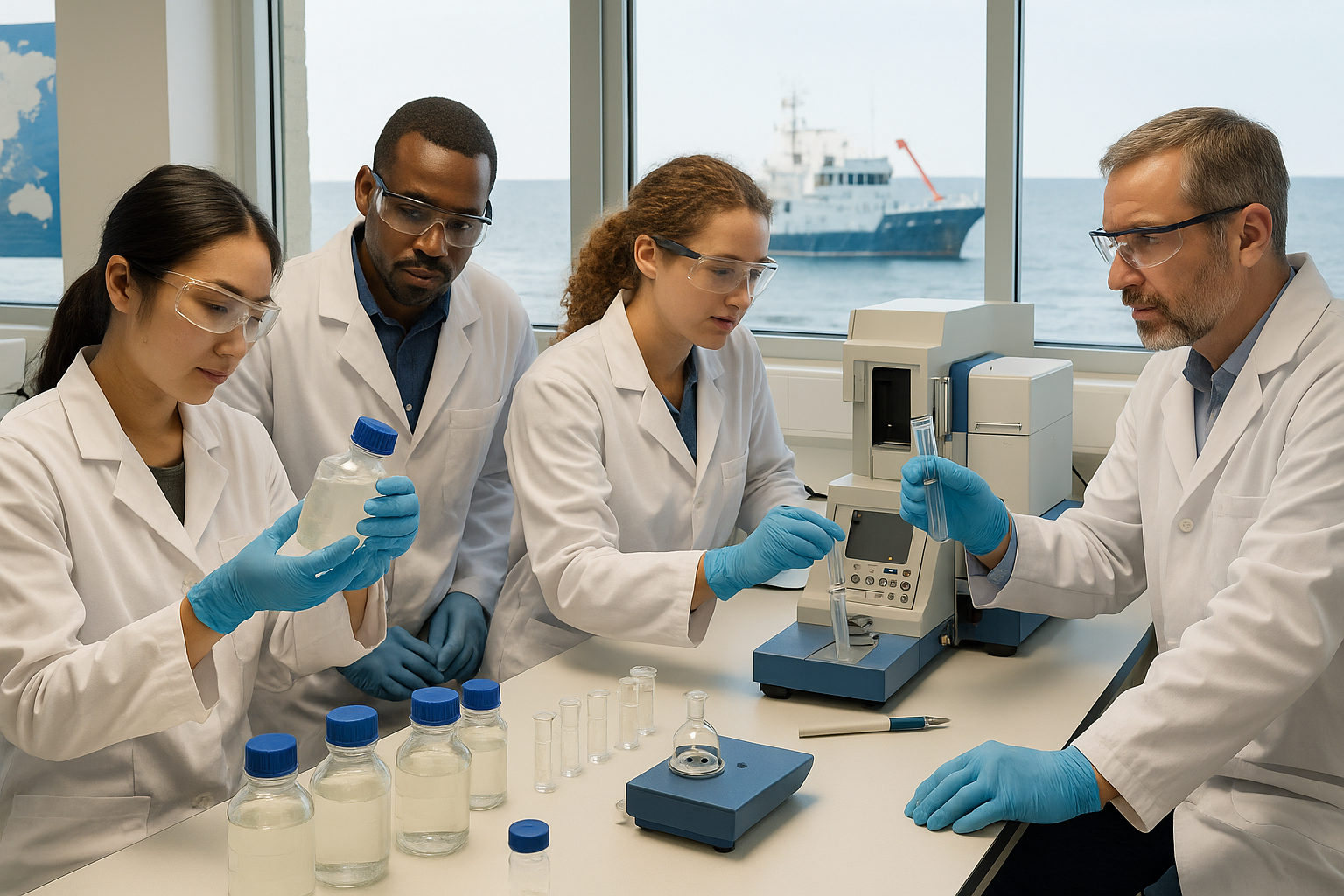
The International Atomic Energy Agency (IAEA) is equipping a new generation of scientists with advanced tools to confront the accelerating impacts of ocean acidification, warming and pollution — threats increasingly jeopardising marine biodiversity and global food security.
Through its Ocean Acidification International Coordination Centre (OA-ICC), the IAEA recently trained 14 early-career researchers from around the world during the third Winter School on Ocean Acidification and Multiple Stressors, held from 24 November to 5 December 2025 at the IAEA Marine Environment Laboratories in Monaco.
Oceans Under Mounting Pressure
Marine ecosystems are facing intensifying environmental stress from rising carbon dioxide levels, record-breaking marine heatwaves and chemical pollution. Scientists warn that these stressors do not act in isolation — their combined effects can amplify damage to species, habitats and fisheries.
"Ocean acidification is not occurring in isolation, but expertise in studying multiple stressors is often lacking. The OA-ICC capacity building programme plays a key role in expanding this knowledge base," said Lina Hansson, Associate Project Officer at the IAEA.
Ocean acidification — caused by the absorption of excess atmospheric CO₂ — reduces seawater pH and affects calcifying organisms such as corals, shellfish and sea urchins. When combined with warming waters and pollution, the biological impacts can be severe, undermining ecosystems that support millions of livelihoods.
Hands-On Science in Monaco and France
During the two-week programme, participants received intensive training in experimental design, seawater chemistry and advanced laboratory techniques. They conducted a hands-on study examining the combined effects of acidification, warming and lithium pollution on the reproductive success of a Mediterranean sea urchin species.
The cohort also visited the Laboratoire d'Oceanographie de Villefranche (LOV) in France for practical training in seawater chemistry monitoring and connected with researchers at the Centre Scientifique de Monaco.
"The Mediterranean Sea is heavily affected by multiple stressors. Record-breaking marine heatwaves, pollution, combined with acidification, have led to mass mortality of key species," said Steeve Comeau, Research Scientist at LOV and a Winter School lecturer. "Training this new generation in multifaceted experimental approaches is critical for predicting future impacts."
Beyond laboratory work, the Winter School emphasized science communication, stakeholder engagement and the integration of traditional knowledge into research design — helping scientists better connect findings with policy and community action.
From Coral Reefs to Patagonian Waters
Participants represented diverse marine regions, from Caribbean coral reefs to Patagonian shellfish ecosystems. The programme concluded with researchers presenting plans to apply their new skills in their home institutions.
Emma Pontes, a US-based researcher studying coral reefs in South Florida, said the training would reshape her approach to multi-stressor research.
"I'm taking away a better understanding of experimental design practices to answer complicated multi-stressor questions. I'll be rethinking our approach to optimize our experiments," she said.
Building Global Capacity for Ocean Management
The IAEA says strengthening scientific capacity is essential for producing reliable, actionable data to guide policymakers and resource managers.
By training early-career scientists, the OA-ICC aims to expand global expertise in assessing how combined environmental pressures affect marine life — knowledge that is crucial for developing effective mitigation and adaptation strategies.
The Winter School is organized annually in collaboration with the Prince Albert II of Monaco Foundation under its Ocean Acidification and other Ocean Changes – Impacts and Solutions (OACIS) initiative, the Laboratoire d'Oceanographie de Villefranche, and scientists from the Scientific Committee on Oceanic Research (SCOR) project Changing Ocean Biological Systems (COBS).
As ocean stress intensifies worldwide, initiatives such as the OA-ICC Winter School are positioning young scientists at the forefront of efforts to safeguard marine ecosystems and the communities that depend on them.
ALSO READ
-
Nuclear Science Brings Cancer Care, Safer Food and Better Water Data Across Regions
-
From Cancer Care to Nuclear Careers, IAEA Conference Puts Global Progress in Focus
-
Türkiye Uses Nuclear Science to Protect Citrus Harvests and Tackle Fruit Fly Damage
-
IAEA and IDB Join Forces to Expand Nuclear Energy in Latin America and Caribbean
-
IAEA Joins Forces With Six Industry Partners to Close Global Cancer Care Divide


 Google News