



UN food leader urges billionaires to help
Gelsinger said at a press roundtable on the sidelines of the World Economic Forum that to us, this is now the No. 1 issue, is in fact the delivery of equipment. A handful of suppliers make high-tech semiconductor manufacturing gear, such as Dutch company ASML.
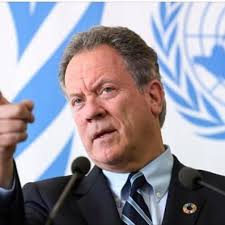
The head of the U.N.'s World Food Programme is telling billionaires it's “time to step up” amid the threat of rising food insecurity worldwide and says he's seen encouraging signs that uber-tycoons like Elon Musk and Jeff Bezos are getting into the action. WFP Executive Director David Beasley built upon a social-media standoff of sorts that he had with Musk last year when the Tesla CEO challenged policy advocates to show how a $6 billion donation sought by the U.N. agency could solve world hunger. Since then, Beasley told The Associated Press at the World Economic Forum gathering in Davos, Switzerland, that “Musk put $6 billion into a foundation. But everybody thought it came to us, but we ain't gotten any of it yet. So I'm hopeful.” He said of Musk: “We're trying every angle, you know: Elon, we need your help, brother.” Beasley said that message was for every billionaire because “the world is in real serious trouble. This is not rhetoric and B.S. Step up now, because the world needs you.” ---- The founder of the World Economic Forum says Russia's war in Ukraine, as well as climate change and the global economy, are key issues at the gathering of business elites and government leaders in Davos, Switzerland. Klaus Schwab said Monday in welcoming remarks that “this war is really a turning point of history and it will reshape our political and our economic landscape in the coming years.'' But also says the world is at “the tail-end of the most serious health catastrophe of the last hundred years — COVID-19.'' Schwab added that climate change and preserving nature is something to urgently address and that concerns about high inflation will affect how to look at the future of the global economy. He pointed to fears of people plunged into poverty and dying of hunger. ___ The head of chipmaker Intel says a shortage of advanced equipment to make semiconductors could hold up global expansion plans. CEO Pat Gelsinger said Monday that there have been “quite significant extensions” in delivery times for chipmaking gear for new chip factories, known as “fabs,” that the company plans to build in the U.S. and Europe. Gelsinger said at a press roundtable on the sidelines of the World Economic Forum that “to us, this is now the No. 1 issue, is in fact the delivery of equipment.” A handful of suppliers make high-tech semiconductor manufacturing gear, such as Dutch company ASML. A shortage of semiconductors that erupted last year hurt the availability of everything from autos to kitchen appliances and highlighted the industry's vulnerability to manufacturing centered in Asia. Intel announced tens of billions of investment in new chipmaking facilities for Europe, including a new fab mega-site in Germany and expansion in Ireland. In January, it announced a plan for a $20 billion plant in Ohio. Gelsinger said the supply of chipmaking equipment is “the most important pinch point to the build-out of capacity today.” He added that he's urging authorities in the U.S. and Europe, which have each launched their own “Chips Act” to promote national semiconductor manufacturing, to speed up the legislation.
(This story has not been edited by Devdiscourse staff and is auto-generated from a syndicated feed.)


 Google News