

EIB Global Unveils Strategic Plan to Tackle Global Challenges and Boost EU Impact
As the world faces increasing geopolitical tensions and economic fragmentation, EIB Global seeks to amplify Europe’s voice as a reliable, sustainable, and values-driven partner.
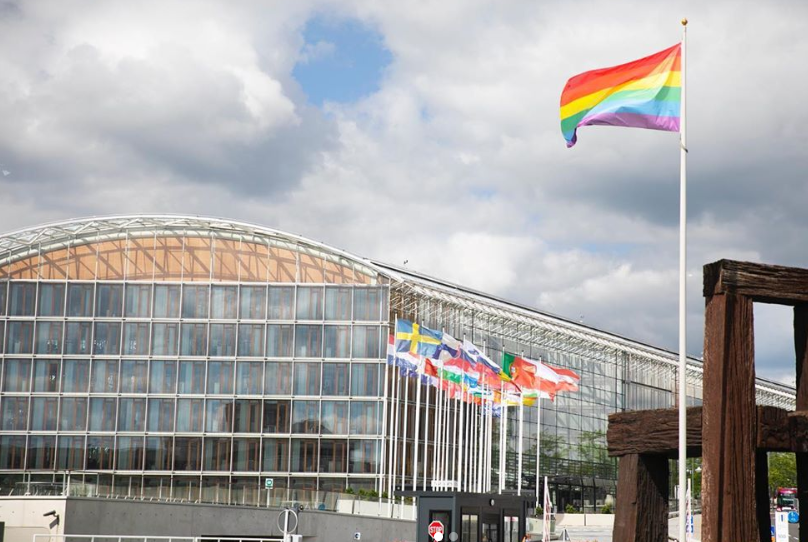
The European Investment Bank (EIB) Group has approved a new set of strategic orientations for EIB Global, its development and international partnerships arm, outlining an ambitious plan to strengthen Europe's global role, accelerate sustainable investment, and support key regions facing urgent development needs.
The plan, covering the period 2025–2027, defines a roadmap for high-impact financing in more than 130 countries, targeting shared global challenges such as climate change, clean energy, sustainable transport, global health, education, women's empowerment, and supply chain resilience.
As the world faces increasing geopolitical tensions and economic fragmentation, EIB Global seeks to amplify Europe's voice as a reliable, sustainable, and values-driven partner.
"In a world of walls, we build new bridges," said EIB Group President Nadia Calviño. "As a strong and reliable partner, we remain committed to cooperation and delivering win-win solutions."
Strategic Focus: A Global Compass for Sustainable Investment
The new orientations act as a strategic compass guiding the EIB Group's investments outside the European Union (EU). They align financing with the EU's Global Gateway strategy — the flagship initiative designed to mobilize sustainable investments in infrastructure, digital connectivity, and clean energy in partner countries.
EIB Global will expand its focus on several core priority areas, including:
-
Clean energy and sustainable transport to support the green transition.
-
Global health and education to strengthen human capital and resilience.
-
Infrastructure to reinforce supply chains and critical connectivity.
-
Women's empowerment and inclusive economic development.
The plan underscores the EIB's dual role: financing projects that foster sustainable growth while advancing the EU's broader foreign policy goals — from supporting Ukraine's recovery to boosting partnerships across Africa, Asia, and Latin America.
Financing Scale-Up and Simplification of Procedures
Between 2025 and 2027, the EIB Group aims to mobilize up to €10 billion annually in development financing, complemented by enhanced technical assistance and knowledge-sharing initiatives to ensure local ownership and effective project delivery.
To accelerate project implementation, the Bank is overhauling its financing procedures. This includes leveraging mutual reliance frameworks with other development banks and synergizing mandates with EU institutions to reduce administrative complexity.
The EIB is also collaborating closely with the European Commission to simplify the deployment of EU guarantees and optimize budgetary mandates. These reforms aim to make EIB Global more agile, responsive, and better equipped to deliver impact where it is most needed.
Strengthening Supply Chains and Access to Critical Raw Materials
In response to recent disruptions in global trade and resource flows, EIB Global will roll out new instruments to support European exporters and diversify supply chains.
A cornerstone of this strategy is the Pan-European Trade and Investment Initiative, which will channel EU guarantees and funding to companies bidding for international projects through a network of national export credit agencies.
Furthermore, the EIB Group will expand its activities in critical raw materials, supporting partnerships between the EU and key resource-rich countries to secure sustainable access to materials essential for clean energy technologies, electric vehicles, and digital infrastructure.
This initiative complements the EU's Critical Raw Materials Act, ensuring that Europe's green and digital transitions are underpinned by stable, responsible, and diversified supply chains.
Regional Priorities: Tailored Action Across Continents
As the world's largest multilateral development bank — owned entirely by the 27 EU Member States — the EIB Group plays a unique role in implementing the EU's external action agenda. The new orientations emphasize regional differentiation, tailoring approaches to local needs while maintaining full alignment with EU policy goals.
Ukraine and EU Enlargement Countries
Ukraine remains at the heart of the EIB's external engagement. Since Russia's full-scale invasion in 2022, the EIB has provided €4 billion in financing for urgent recovery, rebuilding schools, hospitals, kindergartens, and securing critical energy infrastructure. The new plan envisions increased investment in Ukraine's short-term resilience, post-war recovery, and EU accession efforts.
For EU candidate countries in the Western Balkans and Eastern Europe, the EIB will expand its toolkit to include tailored investment products, risk-sharing mechanisms, and technical assistance to enhance connectivity, economic integration, and institutional capacity ahead of EU membership.
EU Neighbourhood and the Middle East
In the Southern and Eastern Neighbourhood, EIB Global will focus on clean energy access, economic resilience, and cross-border infrastructure. The EIB will contribute to the implementation of the EU Black Sea Strategy and the Pact for the Mediterranean, strengthening regional energy and transport links.
In the Middle East, the EIB's engagement will continue to promote economic and financial stability, with a focus on inclusive growth, energy transition, and support for the two-state solution as part of a broader peace and development agenda.
Sub-Saharan Africa
EIB Global's engagement in Africa will focus on key enabling infrastructures such as health systems, water and sanitation, energy access, transport, and digital inclusion. The Bank will prioritize support for local private sectors, small and medium-sized enterprises (SMEs), and public-private partnerships that create jobs and sustainable growth. Building on existing frameworks like Team Europe Initiatives, EIB Global will forge strategic alliances that promote investment and inclusive development.
Latin America and the Asia-Pacific Region
In Latin America and the Caribbean, EIB Global will emphasize regional integration through investments in transport corridors, renewable energy, and digital connectivity. Similarly, in the Asia-Pacific region, the focus will be on critical EU value chains, green industrial transition, and partnerships supporting climate resilience and innovation.
Climate Action and the EIB's Global Mission
The strategic orientations reaffirm EIB Global's commitment to climate action under the second phase of the EIB Group's Climate Bank Roadmap. The Bank aims to ensure that at least 50% of its global financing contributes directly to climate action and environmental sustainability, while all other investments are screened for environmental impact and Paris Agreement alignment.
From renewable energy deployment and sustainable transport corridors to biodiversity protection and green finance, EIB Global's mission is to make sustainable development the foundation of its operations.
EIB Global: Europe's Bridge to the World
With the approval of these orientations, EIB Global solidifies its position as Europe's premier development finance institution, bridging policy, investment, and impact.
By combining European financial strength with local partnerships, the EIB Group is poised to deliver projects that not only drive economic growth but also advance shared values of sustainability, equity, and resilience.
In a rapidly changing world, EIB Global's strategy embodies Europe's determination to remain an active and constructive global partner — one that builds bridges of cooperation, not walls of division.
ALSO READ
-
African Venture Capital Gets a Boost as Oxford Programme Builds Investor Connections
-
Colombia Bets on Vaccine Manufacturing to Build Health Security and Cut Import Dependence
-
Colombia Gets €15 Million Boost to Build Vaccine Capacity and Cut Import Dependence
-
France Plans Housing Hub to Unlock European Funding and Technical Expertise
-
North Macedonia Defines Green Investment and Unlocks Finance With EIB Support


 Google News