

Zelenskyy Questions UN's Efficacy Amid Global Crises
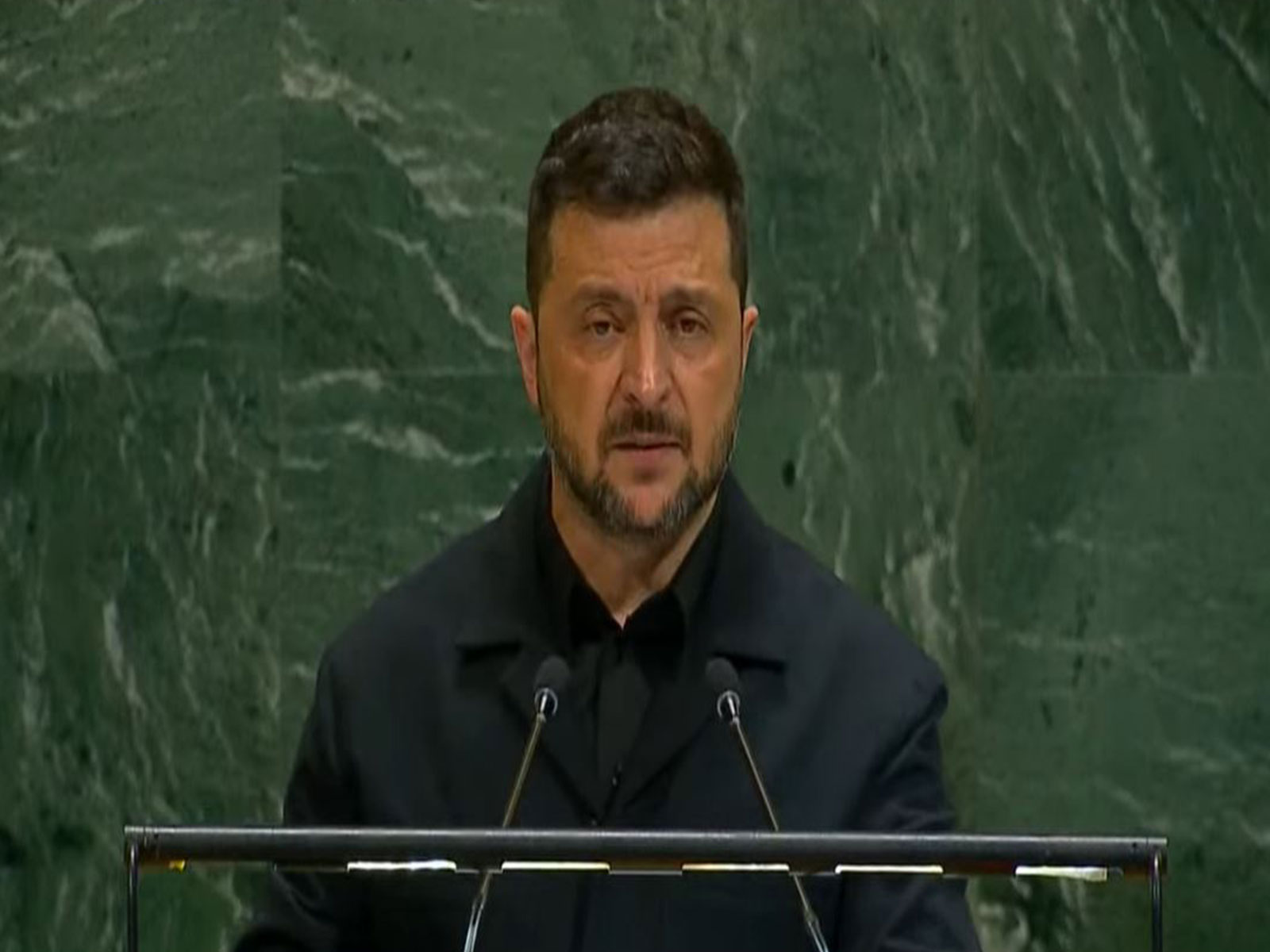
During the 80th United Nations General Assembly's General Debate, Ukrainian President Volodymyr Zelenskyy challenged the UN's effectiveness in global crises like those in Gaza, Syria, and Ukraine. Emphasizing weaponry over legal systems for national survival, he criticized the UN Security Council's power dynamics, highlighting Russia's veto authority.
- Country:
- United States
The 80th United Nations General Assembly's General Debate continued on Wednesday, with Ukrainian President Volodymyr Zelenskyy casting doubt on the UN's capacity to address pressing global crises. Zelenskyy opened his remarks by questioning, "What can anyone living through war really expect from the UN or the global system for decades? Just statements and statements." He highlighted past and ongoing conflicts in Gaza, Syria, and Ukraine as examples where international assistance has been insufficient.
The Ukrainian president stressed that the deciding factor in their ongoing conflict with Russia would be the accumulation of weapons, rather than adherence to legal systems. "If a nation wants peace, it still has to work on weapons. It's sick, but that's the reality," Zelenskyy stated. He went on to express his frustration with the UN Security Council's structure, particularly criticizing Russia's permanent seat and veto power, a major obstacle in securing military assistance from the United States.
"International law doesn't work fully, unless you have powerful friends who are truly willing to stand up for it," Zelenskyy further commented. The longstanding privilege of veto power, held by Russia as one of the five permanent members of the UN Security Council, remains controversial. This authority allows any of the P5—comprising China, France, the United Kingdom, the United States, and Russia—to block substantive resolutions single-handedly, often stalling measures crucial for global peace and security. Russia has been especially prolific in employing this veto, utilizing it to block resolutions about its actions in Ukraine and the humanitarian crisis in Sudan, a pattern echoing Soviet-era practices. (ANI)


 Google News