

Human brain can detect changes in Earth's magnetic field: Study
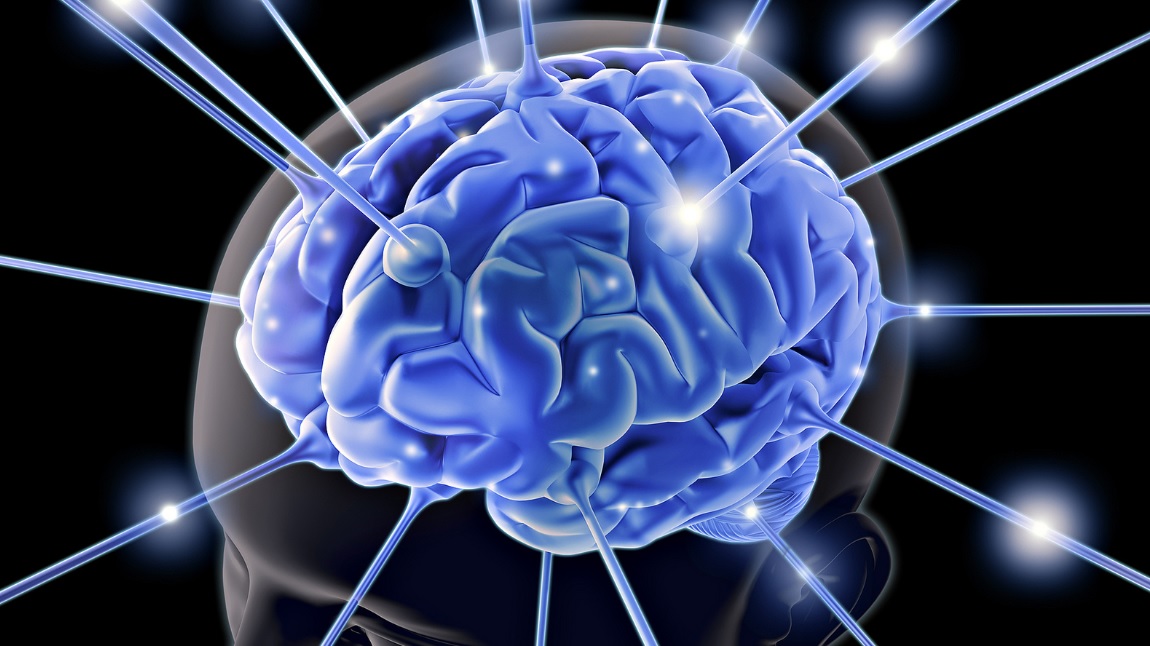
Many people are able to unconsciously detect changes in the Earth's magnetic fields, according to scientists who claim to have found concrete evidence of a new human sense -- magnetoreception. Researchers from California Institute of Technology in the US and the University of Tokyo in Japan offer experimental evidence that human brain waves respond to controlled changes in Earth-strength magnetic fields.
"Many animals have magnetoreception, so why not us?" said Connie Wang, lead author of the eNeuro study published in the journal eNeuro. For example, honeybees, salmon, turtles, birds, whales, and bats use the geomagnetic field to help them navigate, and dogs can be trained to locate buried magnets.
It has long been theorised that humans may share a similar ability. However, despite a flurry of research attempting to test for it in the '80s, it has never been conclusively demonstrated. "Aristotle described the five basic senses as including vision, hearing, taste, smell, and touch," said Joseph Kirschvink, from Caltech.
"However, he did not consider gravity, temperature, pain, balance, and several other internal stimuli that we now know are part of the human nervous system," said Kirschvink. "Our animal ancestry argues that geomagnetic field sensors should also be there representing not the sixth sense but perhaps the 10th or 11th human sense to be discovered," he said.
To try to determine whether humans do sense magnetic fields, researchers built an isolated radiofrequency-shielded chamber and had participants sit in silence and utter darkness for an hour. During that time, they shifted the magnetic field silently around the chamber and measured participants' brain waves via electrodes positioned at 64 locations on their heads.
The test was performed with 34 human participants from a wide age range and a variety of ethnicities. During a given session, the participants consciously experienced nothing more interesting than sitting alone in the dark. However, among many participants, changes in their brain waves correlated with changes in the magnetic field around them.
Specifically, the researchers tracked the alpha rhythm in the brain, which occurs at between 8 and 13 Hertz and is a measure of whether the brain is being engaged or is in a resting or "autopilot" mode. When a human brain is unengaged, the alpha power is high. When something catches its attention, consciously or unconsciously, its alpha power drops.
Several other sensory stimuli like vision, hearing, and touch are known to cause abrupt drops in the amplitude of alpha waves in the first few seconds after the stimulus. The experiments showed that, in some participants, alpha power began to drop from baseline levels immediately after magnetic stimulation, decreasing by as much as 60 per cent over several hundred milliseconds, then recovering to baseline a few seconds after the stimulus.
"This is a classic, well-studied brain wave response to a sensory input, termed event-related desynchronisation, or alpha-ERD," said Shin Shimojo at Caltech. The tests further revealed that the brain appears to be actively processing magnetic information and rejecting signals that are not "natural." PTI MHN
MHN


 Google News