

UNICEF Official Urges Ceasefire as Gaza Faces Catastrophic Child Hunger Crisis
During the mission, the UNICEF team visited a nutrition clinic in Deir el-Balah where 10 children were killed and 19 injured by an Israeli airstrike while queuing for food with their families.
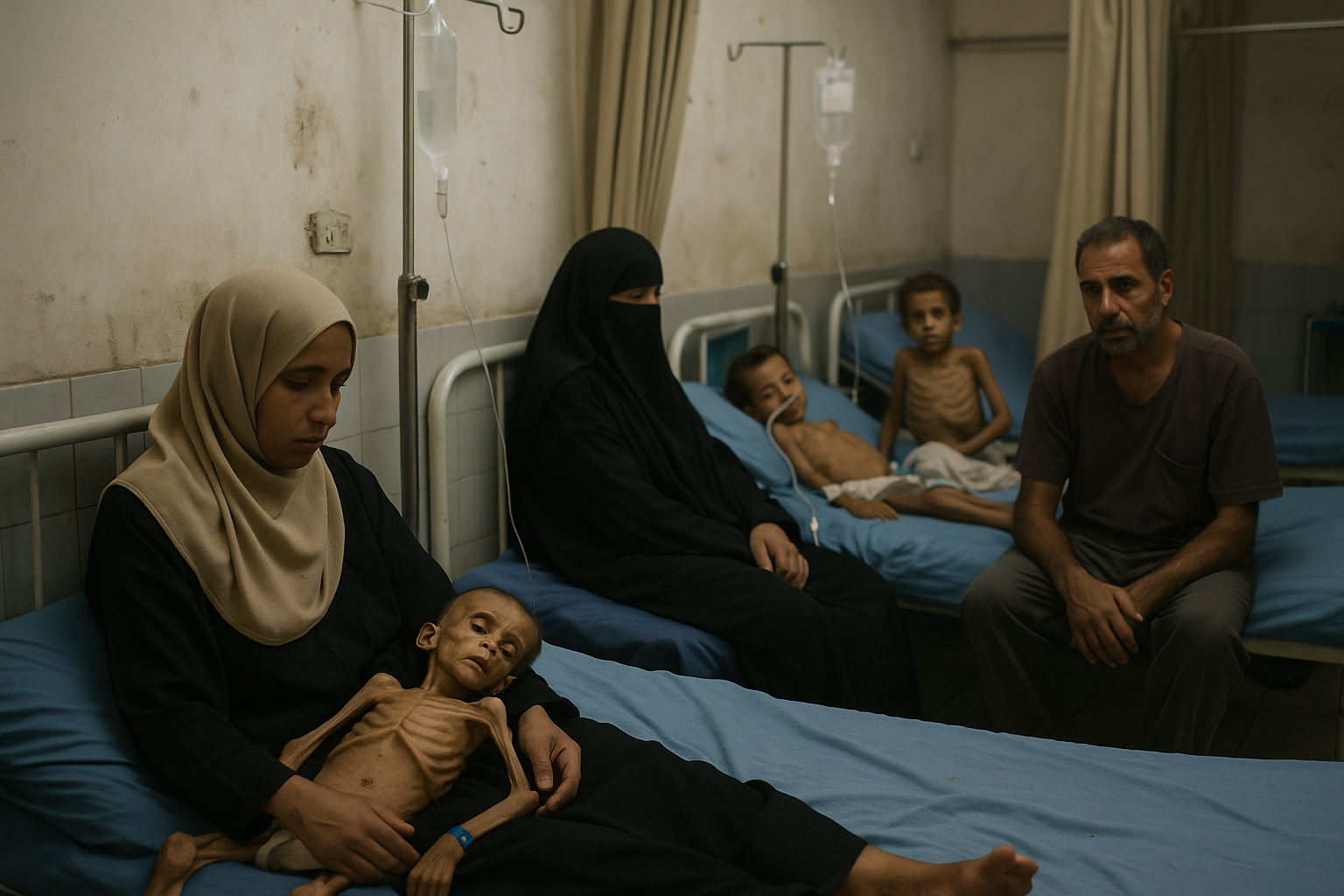
Following a five-day emergency mission to Israel, Gaza, and the West Bank, including East Jerusalem, a top UNICEF official delivered a deeply moving and urgent briefing on the escalating humanitarian catastrophe in Gaza. With more than 18,000 children killed since the conflict began, UNICEF is warning that tens of thousands more are at risk, not from bombs alone, but from famine, disease, and psychological trauma.
The senior UNICEF representative, whose visit marks their fourth trip to Gaza since the war erupted after the October 7th attacks, described a region in collapse and a population of children in agony — hungry, displaced, and scarred by violence.
28 Children a Day: A Classroom Wiped Out Daily
The most heart-wrenching figure shared was that 18,000 children have died since the start of hostilities, averaging 28 child deaths per day — equivalent to an entire classroom being wiped out every 24 hours. These are not victims of natural disasters, the UNICEF official stated, but of human decisions: "They are being starved, bombed, and displaced."
During the mission, the UNICEF team visited a nutrition clinic in Deir el-Balah where 10 children were killed and 19 injured by an Israeli airstrike while queuing for food with their families. The story of 10-year-old Ahmed, who watched his 13-year-old sister Samah die and frantically tried to save her, underscored the unbearable trauma many children are now living with daily.
Gaza Teeters on the Brink of Famine
Gaza is now entering a famine emergency phase, as two major indicators have crossed famine thresholds:
-
One in three people in Gaza are going entire days without food.
-
Global acute malnutrition rates have surpassed 16.5% in Gaza City, placing over 320,000 children at risk of acute malnutrition.
At stabilization centers, health workers are encountering infants so emaciated they are little more than skin and bone, while mothers themselves are too malnourished to breastfeed. Despite these extreme conditions, aid deliveries continue to fall far short of what is required.
Aid Efforts and Limitations
UNICEF is working under extraordinary circumstances. Staff members, many of whom have endured personal loss and trauma, continue to:
-
Deliver 2.4 million liters of clean water daily, reaching 600,000 children.
-
Support infant feeding, including the distribution of infant formula and high-energy biscuits.
-
Provide psychosocial care, reunite separated families, and keep cold chains functioning for critical vaccines.
However, only 30% of UNICEF's health and nutrition appeal for Gaza is funded, and aid convoys are frequently delayed or limited by access restrictions, security issues, and looting.
There are currently 1,500 aid trucks positioned at entry corridors in Egypt, Jordan, Ashdod, and Turkey, with 33 trucks recently allowed in. But this is merely a fraction of the 500 daily trucks needed to stabilize the situation.
Humanitarian Access and Israeli Engagement
During the visit, UNICEF held discussions with Israeli authorities in Jerusalem and Tel Aviv, advocating for:
-
A review of military engagement rules to avoid civilian casualties.
-
Unimpeded humanitarian and commercial access, including items previously restricted for being "dual-use" (e.g., pipes, generators, fuel).
-
Increased entry of commercial food items, like milk and eggs, to reduce desperation and black market activity.
-
Expanded humanitarian pauses not tied to forced displacement or further restriction of civilian movement.
UNICEF emphasized that humanitarian assistance alone cannot meet all needs. The solution requires coordinated commercial traffic, sustained access, and ultimately, a ceasefire.
A Ceasefire as the Only Sustainable Path
The official called for an immediate and sustained ceasefire and reiterated support for efforts to secure the return of hostages still held by Hamas and other armed groups.
"What is happening on the ground is inhumane. What children from all communities need is a sustained ceasefire and a political way forward. We are at a crossroads. The decisions made now will determine whether tens of thousands of children live or die."
Crisis in the West Bank and Among Israeli Children
While the spotlight remains on Gaza, the crisis extends beyond. In the West Bank, 39 Palestinian children have been killed so far in 2025. The team also met Israeli children affected by the war — children living with fear, trauma, and displacement.
A particularly sobering visit was made to a forcibly displaced Bedouin community near Ramallah, highlighting the widespread nature of conflict-related trauma for Palestinian families beyond Gaza.
"Children don't start wars, but they are always the ones who pay the highest price."
The Global Call for Action
UNICEF and other humanitarian actors are urgently appealing to the international community for:
-
Increased funding, particularly for nutrition, healthcare, and water.
-
Unrestricted humanitarian access.
-
Political support for a ceasefire that ends the suffering and paves the way for peace.
With Gaza in its 22nd month of war, the need for urgent, decisive global leadership has never been more evident. The current reality for Gaza's children — and their futures — hangs in the balance.
ALSO READ
-
Lebanon’s Children Cannot Lose More of Their Childhood, UNICEF Chief Urges Action
-
Sudan Shelter Drone Strike Reportedly Kills a Boy and Injures 12 Children
-
Syria’s Returning Children Need Schools, Care and Safe Water to Rebuild Lives
-
Lebanon’s Children Face Hunger, Lost Schooling and Work as Families Reach the Brink
-
UNICEF Praises Jordan’s Progress for Children as Funding Cuts Threaten Vital Services


 Google News