

New 4IR centre opens to prepare South African youth for future jobs
The Deputy Minister said the new centres will provide practical, industry-focused training linked to South Africa's economic priorities.
- Country:
- South Africa
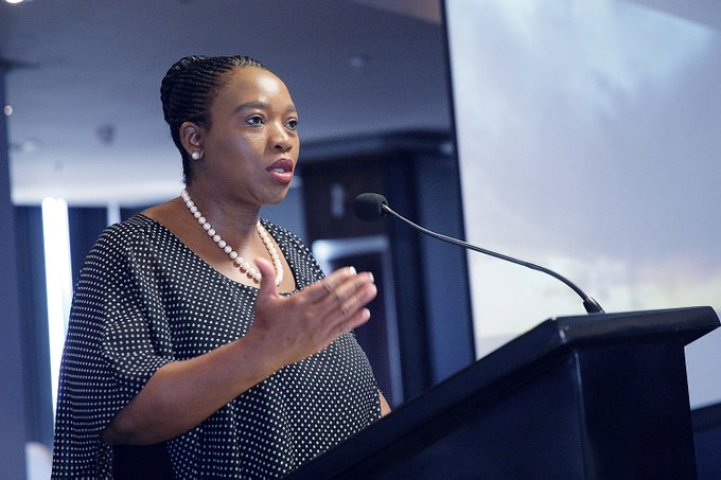
South Africa has expanded its efforts to prepare young people for the digital economy with the launch of a Fourth Industrial Revolution (4IR) Centre of Excellence and three new Centres of Specialisation at the Mossel Bay Campus of South Cape TVET College. Higher Education and Training Deputy Minister Dr Nomusa Dube-Ncube officially opened the facilities, describing them as a major investment in technical education that will equip students with the skills needed for emerging industries and future careers.
R24 million investment boosts technical education
The new facilities were established through a combined investment of more than R24 million from the Education, Training and Development Practices SETA (ETDP SETA), the Manufacturing, Engineering and Related Services SETA (MerSETA) and the Industrial Development Corporation (IDC), with additional support from Intel and HP.
The Centres of Specialisation focus on electrical engineering, boilermaking and automotive motor mechanics, while the 4IR Centre of Excellence introduces advanced technologies such as robotics, automation, artificial intelligence and smart manufacturing into TVET college training.
Dube-Ncube said the investment represents confidence in the potential of young South Africans and reflects the government's commitment to providing world-class vocational education that responds to changing industry needs. She noted that the Mossel Bay facility joins a growing national network of 4IR Centres of Excellence established at Eastcape Midlands TVET College, Flavius Mareka TVET College and Letaba TVET College.
Training aligned with future industries
The Deputy Minister said the new centres will provide practical, industry-focused training linked to South Africa's economic priorities. Electrical students will receive training in modern electrical installations and renewable energy systems, while boilermaking students will develop expertise in fabrication, welding and computer-aided design. Automotive motor mechanics students will gain skills required to maintain hybrid and electric vehicles, preparing them for the transition to cleaner transport technologies.
Dube-Ncube encouraged students to embrace digital technologies, saying skills such as coding, robotics and artificial intelligence will play an increasingly important role in the future job market. She stressed that every young South African should have the opportunity to learn the technologies shaping tomorrow's economy.
Partnerships to improve employment opportunities
Calling for stronger collaboration between education and industry, the Deputy Minister urged businesses, funding partners and the Mossel Bay Municipality to support the college through workplace learning, internships, mentorship programmes and graduate employment opportunities. She said partnerships between TVET colleges and Economic Development Zones can help ensure that training remains aligned with regional industries, including maritime services, energy and agriculture along the Garden Route.
Dube-Ncube also highlighted government-funded international scholarship programmes, noting that South African students are currently studying in countries including Germany, the Netherlands, Japan and China. This year, 196 students have been awarded or nominated for scholarships across eight countries from more than 5,600 applications, with applications for the 2027 programmes expected to open between August and December. She added that investments in modern training facilities will also strengthen South Africa's performance at international competitions such as the WorldSkills Championship, enabling students to develop skills that meet global industry standards.


 Google News