

SARB Holds Repo Rate at 6.75% Amid Middle East Conflict, Flags Rising Inflation Risks
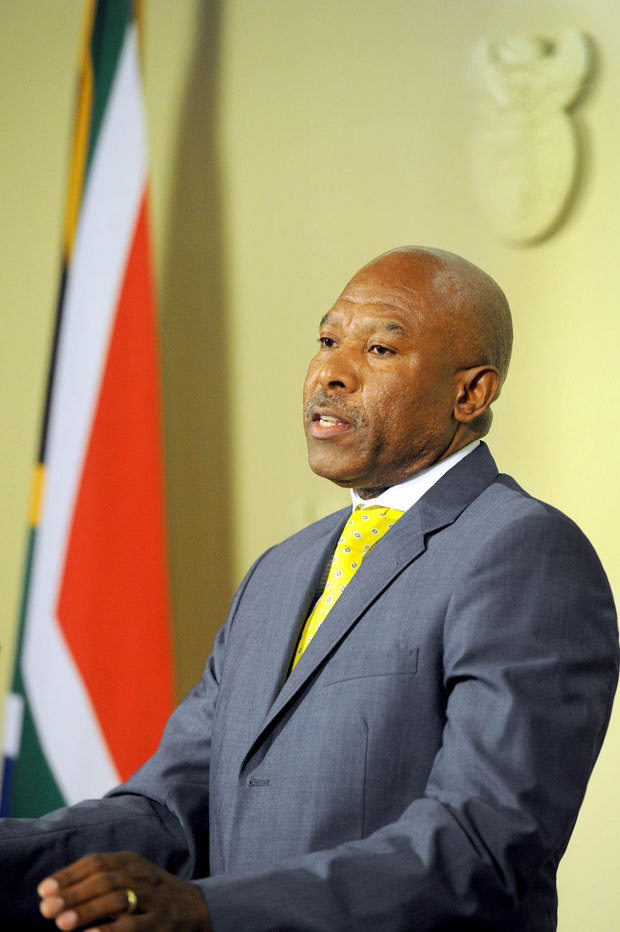
Announcing the decision, which was unanimous, SARB Governor Lesetja Kganyago said policymakers are adopting a cautious approach as global conditions remain volatile.
- Country:
- South Africa
The South African Reserve Bank (SARB) has opted to keep its benchmark repo rate unchanged at 6.75%, citing heightened global uncertainty triggered by the ongoing conflict in the Middle East and its potential impact on inflation and economic growth.
Announcing the decision, which was unanimous, SARB Governor Lesetja Kganyago said policymakers are adopting a cautious approach as global conditions remain volatile.
Global Conflict Creates Inflationary Supply Shock
Kganyago described the Middle East conflict as a classic supply shock, where:
-
Prices—especially energy—rise sharply
-
Economic demand weakens simultaneously
"The coming months will be crucial for assessing the longer-term inflation consequences. Given current forecasts, we see inflation risks to the upside," he said.
He explained that central banks typically:
-
Look through short-term price spikes
-
Focus on preventing second-round effects, where initial price increases spread across the economy
Inflation Currently Stable but Set to Rise
South Africa's latest inflation data shows:
-
Headline inflation: 3.0% (February)
-
Core inflation: 3.0%
Both figures are within SARB's target range. However, rising energy prices are expected to push inflation higher:
-
Inflation projected to rise to around 4% in the near term
-
Fuel inflation expected to exceed 18% in Q2
The central bank expects inflation to gradually ease back to 3% by late 2027, assuming global conditions stabilise.
Economic Growth Improving but Still Fragile
South Africa's economy showed modest improvement:
-
GDP growth: 1.1% in 2025
While this marks progress compared to recent years, it remains below long-term averages.
Kganyago pointed to:
-
Rising investor confidence
-
Improved investment activity
as positive signs, but warned that the ongoing conflict could disrupt the recovery.
SARB forecasts:
-
Growth rising to around 2% over the next few years
-
However, downside risks have increased due to global instability
Scenario Analysis: Oil Prices and Rand Key Risks
SARB outlined two alternative scenarios based on how long the conflict persists:
Scenario 1 (Moderate Shock):
-
Conflict lasts ~2 months
-
Oil prices near $100/barrel
-
Rand weakens by ~5%
➡ Inflation exceeds 4%➡ Likely one interest rate hike
Scenario 2 (Severe Shock):
-
Conflict lasts over a year
-
Oil remains above $100/barrel
-
Rand weakens by ~10%
➡ Inflation exceeds 5%➡ Multiple rate hikes required
In both scenarios:
-
Growth weakens initially
-
Inflation eventually stabilises as oil prices ease and policy tightens
Policy Strategy: Caution with Flexibility
The decision to hold rates reflects a wait-and-watch strategy, aligned with global central banks that are also pausing to assess evolving risks.
Kganyago stressed that:
-
Monetary policy must prevent temporary shocks from becoming permanent inflation
-
Interest rate decisions will remain data-driven and responsive
Progress Made, But Challenges Remain
Despite global uncertainty, South Africa has made notable macroeconomic gains:
-
Lower and stable inflation
-
Improved fiscal outlook
-
Gradual economic recovery
However, sustaining this progress will require:
-
Prudent monetary policy
-
Reduced public debt levels
-
Lower administered price inflation
-
Continued structural reforms to boost long-term growth
The Bigger Picture: Navigating Global Volatility
The SARB's decision highlights the delicate balance central banks face:
-
Supporting economic growth
-
Containing inflation amid external shocks
With global energy markets under pressure and geopolitical risks rising, South Africa's economic outlook will depend heavily on how long the conflict persists and how effectively policymakers respond.


 Google News