

UN Rights Chief Condemns Crackdown on Political Freedoms in Nicaragua
The warning follows remarks by Nicaragua's co-president Daniel Ortega, who said new laws could prevent individuals and groups with opposing political views from taking part in future elections.
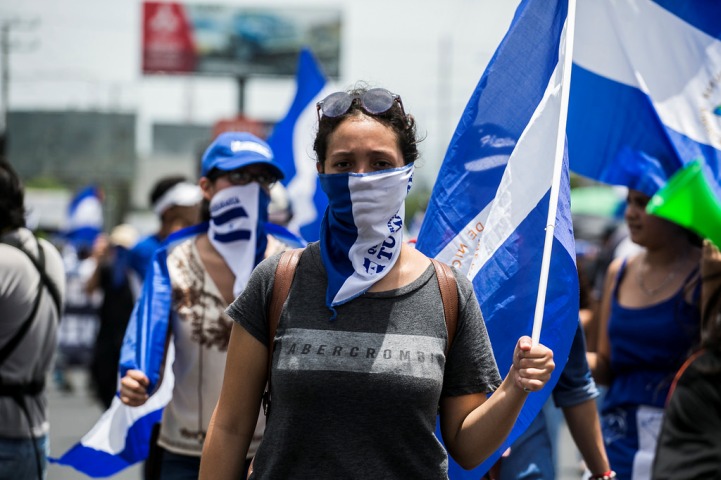
The United Nations High Commissioner for Human Rights, Volker Türk, has expressed deep concern over recent actions by the Nicaraguan government, warning that new restrictions are further limiting political participation, shrinking civic space and weakening the country's rule of law. In a statement issued on Wednesday, Türk criticised a series of recent developments, including proposals that could prevent people with dissenting political views from standing in elections and the continued detention of political opponents.
Concerns grow over election restrictions
The warning follows remarks by Nicaragua's co-president Daniel Ortega, who said new laws could prevent individuals and groups with opposing political views from taking part in future elections.
Türk said such measures would further undermine civil and political rights, adding that political participation should remain open to citizens regardless of their opinions. He stressed that all people must have the opportunity to vote and seek public office in line with Nicaragua's international human rights obligations.
The High Commissioner also noted that authority is becoming increasingly concentrated under the country's co-presidency while the ruling party maintains control over Parliament, municipalities and regional councils.
Political detentions and civic space remain under scrutiny
The UN human rights office said the government recently revoked the professional credentials of several lawyers without providing a legal basis or official explanation. It also reported that at least 46 people remain arbitrarily detained for political reasons.
Türk described these actions as part of a broader pattern of restrictions that has steadily reduced fundamental freedoms and left civic space almost entirely closed. According to the statement, independent opinions and criticism of the government continue to face systematic suppression.
Indigenous communities and religious groups face challenges
The High Commissioner also highlighted concerns raised by civil society organisations over mining and extractive projects affecting Indigenous territories. Reports indicate that up to one-quarter of 18 Indigenous territories have been impacted by mining concessions, many of which were allegedly approved without obtaining the free, prior and informed consent of Indigenous Peoples.
Türk also voiced concern over reports of increasing pressure on religious organisations, including the Catholic Church. He said he was particularly disturbed by the lack of official information regarding the whereabouts and condition of 80-year-old Bishop Abelardo Mata Guevara, who was reportedly detained on 29 June.
Call to restore rights and the rule of law
The UN rights chief urged the Nicaraguan authorities to immediately release everyone arbitrarily detained for political reasons and ensure that all detainees are treated with humanity and dignity in accordance with international human rights law.
He also called on the government to reopen civic space, restore the rule of law and protect the rights of people from all political backgrounds to participate freely in the country's democratic process.


 Google News