

Argentina Approves Milei's Sweeping Economic Reforms Amid Protests
Argentina's lower house approved President Javier Milei's extensive economic reform bills. After months of negotiations and protests, the legislation aims to reduce the fiscal deficit and attract foreign investments. The approval marks a significant victory for Milei's administration, affirming his capabilities in handling Argentina's economic policies.
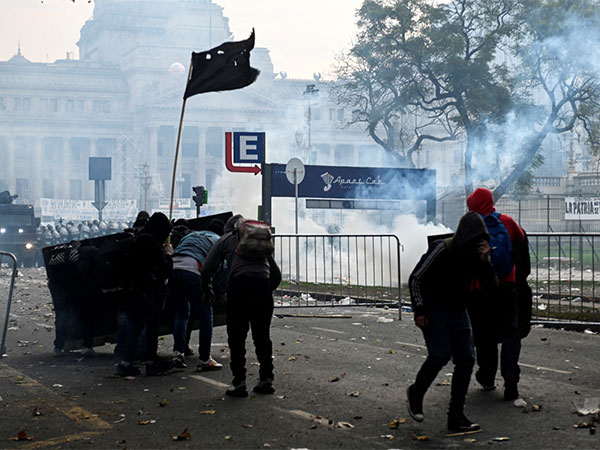
Argentina's lower house on Friday gave the green light to President Javier Milei's comprehensive economic reform bills, marking a critical legislative win for the libertarian leader. This follows six months of intense negotiations and vociferous protests, casting doubt over his governance capabilities.
The reform legislation, designed to cut Argentina's fiscal deficit and entice foreign investment, finally passed in the lower house to become law. The approval came after the bills narrowly made it through the Senate earlier this month, despite staunch political opposition. Milei's administration celebrated the law’s passage as a step toward a free and prosperous Argentina, as promised in last November's election. The administration attributed the tumultuous process to 'obstructionism' from Milei’s hard-line opponents. Controlling less than 15% of congressional seats, Milei has thus far relied heavily on executive powers to reduce public spending and implement a minimal state approach. Analysts suggest that congressional approval is essential for bolstering investor confidence in a country known for defaults and breaches of contracts. “Milei obtained a minimum viable product from Congress to demonstrate to the market his willingness and ability to compromise with the political establishment,” said Marcelo J. García, director for the Americas at New York-based geopolitical risk consultancy firm Horizon Engage.
Following a 13-hour debate, the 232-article state overhaul bill passed comfortably in the lower house. Known as the Chamber of Deputies in Argentina, this body had already approved the legislation's content in April, sending it to the less cooperative Senate for further scrutiny.
In its latest session, the Chamber of Deputies merely had to accept or reject the amendments made by the Senate. Milei's legislation includes incentives for investment, plans to privatize several state-owned enterprises, and a controversial extension of presidential powers over economic, energy, and other state affairs for one year. Although the reforms signal radical changes, the final version is a diluted form of Milei's initial proposal, which originally comprised over 600 articles.
ALSO READ
-
IDB Approves $400 Million for Argentina to Strengthen Security and Reform Prisons
-
Argentina’s Misiones Secures $200M From IDB for Roads, Power and Better Housing
-
Argentina's Bold Move: Intensifying Falkland Islands Dispute with UK
-
Argentina Targets Companies with Falklands Bill Amid Tensions
-
Argentina's Bill to Challenge Falklands' Oil Operations


 Google News