

Narend Singh Calls for Strong Partnerships to Grow Ocean Economy
- Country:
- South Africa
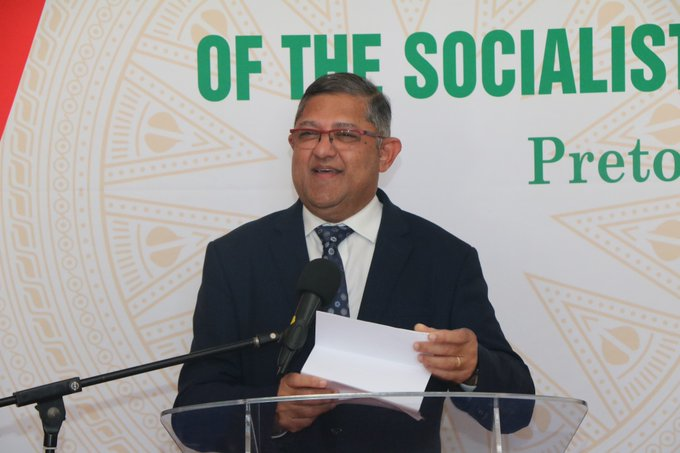
South Africa's Deputy Minister of Forestry, Fisheries and the Environment, Narend Singh, has called for stronger partnerships between government, businesses and local communities to unlock the full potential of the country's oceans economy. Speaking at the Rural Oceans Economy Indaba 2026 in the Eastern Cape, Singh said meaningful collaboration is the key to turning coastal opportunities into lasting economic benefits for communities that depend on marine resources for their livelihoods.
The event, held in the Amathole District under the theme "Unlocking Coastal Opportunities: Partnerships for Community Growth," brought together government representatives, industry stakeholders and community leaders to discuss ways of expanding economic activity along South Africa's coastline. Singh said the country already possesses abundant natural resources and significant opportunities within its coastal regions, but stronger partnerships are needed to convert those opportunities into jobs, investment and sustainable economic growth.
He urged all stakeholders to work together to build an inclusive oceans economy that creates opportunities for future generations while protecting the country's marine environment.
Partnerships seen as the foundation for coastal development
Addressing delegates at the indaba, Singh said creating a thriving oceans economy will require investment that goes beyond physical infrastructure. He highlighted the importance of developing skills, supporting cooperatives, improving access to finance and creating more opportunities for young entrepreneurs and women who want to participate in ocean-based industries.
According to the Deputy Minister, coastal communities must be placed at the centre of future development plans so they can benefit directly from economic activity taking place in nearby marine environments. He explained that stronger cooperation between government departments, private businesses, civil society organisations and local communities would make it easier to mobilise investment, technical expertise and financial resources for projects that promote inclusive growth.
Singh said South Africa does not lack economic opportunities along its coastline. The greater challenge lies in building partnerships capable of unlocking those opportunities and ensuring they produce meaningful benefits for people living in coastal districts. He encouraged all sectors to deepen collaboration and work toward shared goals that balance economic development with environmental responsibility.
South Africa's extensive coastline supports thousands of jobs across industries including fisheries, marine transport, tourism and aquaculture. These sectors contribute billions of rand to the country's economy every year while providing livelihoods for communities that rely heavily on ocean resources.
Operation Phakisa laid the groundwork for growth
Singh reflected on the progress made since the launch of Operation Phakisa: Oceans Economy in 2014, describing the initiative as a major step toward unlocking investment and employment opportunities across several marine industries.
The programme was designed to accelerate growth in areas such as aquaculture, marine transport and manufacturing, offshore oil and gas exploration, coastal tourism and ocean governance. According to Singh, Operation Phakisa demonstrated that South Africa's oceans economy could attract billions of rand in investment while creating hundreds of thousands of jobs for citizens.
Over the past decade, the initiative has supported improvements in coastal infrastructure, strengthened marine protection measures and encouraged investment in ship repair facilities at major ports. It has also helped expand emerging industries such as aquaculture, which continues to create new opportunities for coastal communities and entrepreneurs.
The Deputy Minister said these achievements provide a strong foundation for the next stage of South Africa's oceans economy strategy. Lessons learned through Operation Phakisa have shaped future planning while highlighting the importance of combining economic development with responsible environmental management.
Master Plan aims to create jobs and support coastal communities
South Africa is now entering a new phase with the finalisation of the Oceans Economy Master Plan, which is expected to guide future investment and development across the sector. Singh explained that the plan is designed to increase the oceans economy's contribution to employment, economic growth and long-term national development while maintaining a strong focus on sustainability, inclusivity and transformation.
The Master Plan examines value chains across key marine industries, identifies obstacles that limit growth and proposes practical measures to improve competitiveness, attract greater investment and strengthen local industries. Singh said the strategy builds on the success of Operation Phakisa by placing greater emphasis on expanding high-potential sectors and improving opportunities for emerging businesses.
For districts such as Amathole, the Master Plan presents an opportunity to align local development projects with national priorities while strengthening industries including fisheries, aquaculture and coastal tourism. Singh said supporting small-scale producers, encouraging entrepreneurship and investing in coastal infrastructure could help stimulate local economies and generate more employment opportunities across rural coastal communities.
The Deputy Minister pointed to several initiatives already underway in the Amathole District through Operation Phakisa, particularly projects linked to aquaculture development and marine tourism. These initiatives demonstrate how sustainable use of ocean resources can create local value chains, support small businesses, improve household incomes and expand employment opportunities within rural communities.
He said these projects also prove that economic growth and environmental protection are not competing goals but can reinforce one another when development is carefully planned and responsibly managed. Singh concluded by encouraging government, investors and community leaders to continue working together so South Africa's oceans economy becomes a powerful driver of inclusive growth, stronger coastal communities and long-term prosperity.


 Google News