

Nzimande Calls for Sovereign African Research Agenda at SFSA 2025 Forum
The Minister argued that Africa needs a sovereign research agenda—one designed around the continent’s own developmental priorities, socio-economic needs, and long-term strategic interests.
- Country:
- South Africa
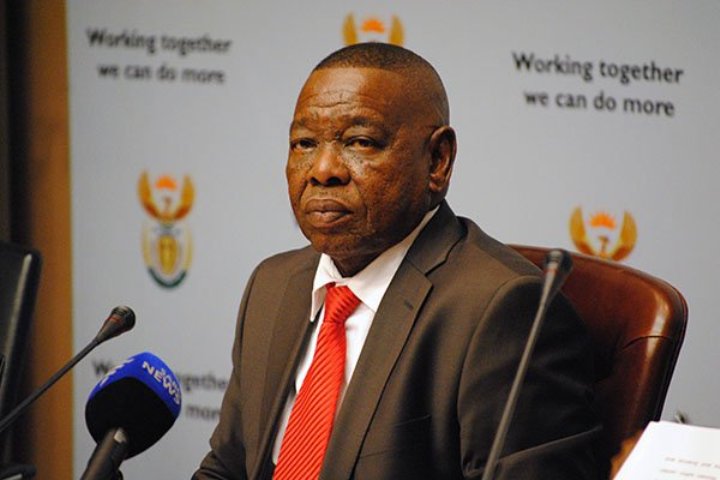
Minister of Science, Technology and Innovation, Professor Blade Nzimande, has used the platform of the Science Forum South Africa (SFSA) 2025 to call for a decisive shift toward an African-led, African-funded, and African-directed research ecosystem. Addressing more than 6 000 participants, including scientists, youth innovators, policymakers, and civil society members, Nzimande emphasised that the continent could no longer afford a research agenda shaped primarily by external funders or geopolitical influences.
The Minister argued that Africa needs a sovereign research agenda—one designed around the continent's own developmental priorities, socio-economic needs, and long-term strategic interests. "By this, I mean a research agenda that is designed, funded, and directed based on African priorities and concerns—not based on the generosity of external donors, regardless of their benign intentions," he said.
Building research capacity and scientific infrastructure
Nzimande outlined several structural reforms required to realise this vision. Foremost among them is the need to build robust, accessible science infrastructure, particularly in countries where laboratory facilities, data centres, and research institutions remain under-resourced.
Such infrastructure, he noted, must be inclusive and deliberately supportive of young researchers and women in science, who remain underrepresented across STEM fields. The Minister also stressed the importance of strengthening maths and science education in public schools, arguing that long-term scientific capability begins with foundational skills.
Retaining critical talent and reversing skills flight
One of the most pressing challenges highlighted was the persistent loss of skilled scientists, engineers, and researchers to other continents. Nzimande advocated for African governments to improve working conditions, research funding, and career pathways to retain talent. Competitive salaries, modern facilities, and regional collaboration networks, he said, are essential to keeping Africa's brightest minds on the continent.
Advancing mineral beneficiation and financial sovereignty
Central to the sovereign research agenda is Africa's ability to process its own mineral wealth, rather than exporting raw materials for processing elsewhere. Nzimande called for investment in research capabilities that would support mineral beneficiation industries, ensuring more value is retained within African economies.
He further warned that illicit financial outflows, often tied to resource exploitation and poor regulatory systems, drain the revenue needed to expand scientific institutions and essential public services. Strengthening transparency, financial governance, and regional cooperation, he said, is required to protect the continent's developmental resources.
Bridging science, industry and innovation
The Minister reiterated the urgency of building stronger connections between science, technology and industry. He called for a renewed focus on commercialisation, industrial innovation, and the growth of technology-driven SMMEs, stressing that innovation must translate into economic opportunity.
The South African Tech Challenge 2025 was highlighted as a key initiative that identifies high-impact SMMEs developing solutions for societal challenges such as healthcare, environmental sustainability, digital inclusion, and manufacturing.
Harnessing emerging technologies and preparing for future pandemics
Nzimande also pointed to the transformative potential of artificial intelligence (AI), advanced data analytics, and biotechnology. He urged African institutions to adopt emerging technologies strategically—focusing on ethical AI, local data training, and applications that support public health, education, climate resilience, and industrial development.
He reaffirmed Africa's commitment to achieving 60% local vaccine production by 2040, a target supported by the African Union and the Africa CDC. The COVID-19 pandemic, he said, exposed the continent's vulnerabilities and highlighted the necessity of regional research networks, technology transfer mechanisms, and local manufacturing capacity.
A forum shaping a decade of science diplomacy
The SFSA 2025—hosted jointly with the National Advisory Council on Innovation (NACI) and the Department of Science, Technology and Innovation (DSTI)—marks its 10th anniversary this year. The five-day programme focuses on strengthening science diplomacy and science advice across Africa and the Global South.
The forum also coincides with the conclusion of South Africa's G20 Presidency, which prioritised global science partnerships, digital transformation, and inclusive technological innovation.
This year's theme, "Placing Science, Technology and Innovation at the centre of Government, Education, Industry and Society," underscores the need for a coordinated, whole-of-society approach to scientific progress.
Addressing inequality in an era of rapid technological expansion
While celebrating technological breakthroughs, Nzimande acknowledged the paradox of rising innovation alongside widening social inequality. He challenged participants to rethink how scientific advancement can enable social inclusion rather than deepen divides.
"How do we make sure our science and technology innovations facilitate pathways for social inclusion and social justice?" he asked. Nzimande urged stakeholders to envision science and technology as tools of equity, enabling fair access to opportunities, knowledge, and economic participation.
A call to action for Africa's scientific future
In closing, Nzimande asserted that the continent stands at a pivotal moment—one that requires bold decisions, unified planning, and long-term investment to reshape Africa's scientific destiny. "This is the moment for us to act," he said, calling for collective responsibility across governments, academia, industry, and global partners.
The Minister's address set an ambitious tone for the future of African science, anchored in sovereignty, collaboration, innovation, and inclusive development.


 Google News